English
Views: 0 Author: Site Editor Publish Time: 2026-04-15 Origin: Site

Output capacity tells us how many cups a cup thermoforming machine can make in a certain time. Companies use output capacity to help plan how much to make and to fill what people want to buy. The world market for these machines is growing fast because more people want packaged food and drinks.
The market was worth $1.2 billion in 2023.
It could get twice as big by 2032 with a 7.5% CAGR.
Hengfeng is special because it has high output capacity and makes customers happy.
Evidence Type | Details |
|---|---|
Market Usage | Hengfeng's machines are used by 7 of the top 10 packaging companies in the world. |
R&D Investment | Hengfeng spends 15% of its yearly money on R&D to make output capacity better. |
Customer Support | 98% of customers are happy because service is fast and reliable. |
Output capacity is very important for planning. Knowing how many cups a machine makes helps companies meet orders and earn more money.
Automation helps make more cups. Fully automatic machines need fewer workers and make fewer mistakes, so production is easier.
Regular maintenance and smart upgrades help machines work better. Taking care of machines and using new technology can make more cups and less waste.
Picking the right machine is important. Think about how many cups you need, what materials you use, and your budget to choose the best thermoforming machine.
Hengfeng's machines are known for being efficient. Their smart technology and good customer support help companies make high-quality cups fast.
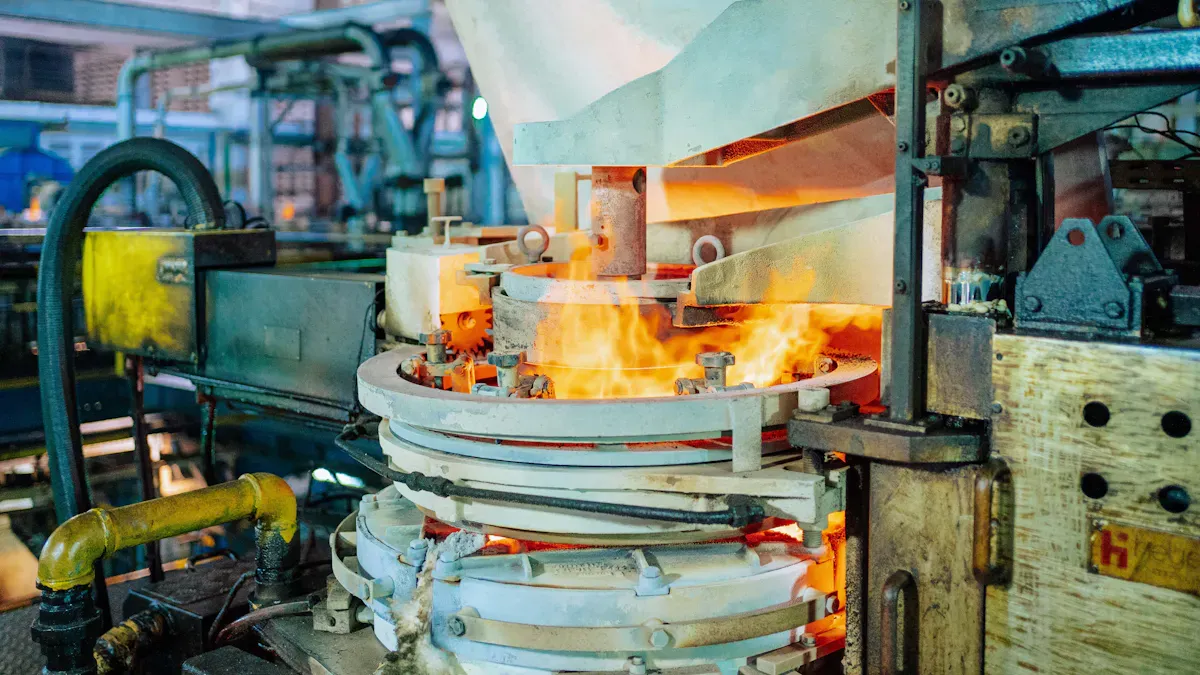
Image Source: pexels
Output capacity is how many cups a thermoforming machine makes in a certain time. In plastic cup factories, people count how many finished cups come out each minute or hour. This helps companies compare machines and decide what they need. The table below shows how different automation levels change output, how many workers are needed, and how often mistakes happen:
Automation Level | Output Range (cups/min) | Labor Required | Error Rate |
|---|---|---|---|
Manual | 10–20 | 3–5 operators | 12% |
Semi-Automatic | 40–80 | 1–2 operators | 6% |
Fully Automatic | 90–150 | 0.5 operators | 1.8% |
Hengfeng uses smart technology to make more cups with fewer workers and less mistakes. Their machines have smart controls and strong quality checks. This keeps each cup good and makes the process steady. Hengfeng’s way follows industry rules and works for many uses, like food packaging or special brand cups.
Output is very important for planning in plastic cup factories. When a company knows its output, it can plan how many cups to make and when to send them. High output lets companies fill big orders and meet what people want. This makes work smoother and helps the company earn more money.
The market for paper and plastic cups is growing quickly. In 2020, the paper cup market was worth over $8.3 billion. Experts think it will grow by 4.5% every year until 2028. More people want earth-friendly products, and new rules help this happen. When companies make more cups, the cost for each cup goes down. This means they can make more money as they make more cups.
Many companies have done better by making more cups. For example:
Avalign Technologies made their machines work 25-30% better.
They made millions more cups without buying new machines.
They fixed slow spots in production to make more cups.
Hengfeng’s machines help companies reach these goals. Their machines use less power, need fewer workers, and keep cups good. This makes making cups easier and helps companies earn more. Good output also means companies can change plans fast and keep customers happy.
Output capacity is more than just a number. It helps a company plan, grow, and stay strong in the plastic cup business.
How fast a thermoforming machine works decides how many cups it makes each hour. If the machine is fast, it can make more cups. But the mold design must also help the machine work quickly and evenly. Mold design is very important for output capacity. Good molds let the plastic move easily, cool down fast, and let cups come out without sticking. This helps the line keep moving and means there are fewer stops.
The table below shows how different mold features change output:
Aspect | Impact on Output Capacity |
|---|---|
Material Flow | Influences how efficiently materials fill the mold, affecting production speed. |
Cooling Efficiency | Affects cycle time and quality of the molded product, impacting overall output. |
Mold Material Selection | Directly influences durability and heat transfer, which are crucial for high output. |
Surface Treatment | Enhances release performance and reduces friction, leading to faster production cycles. |
Maintenance Practices | Regular care minimizes downtime and prolongs mold life, ensuring consistent output levels. |
A good mold helps the machine run at a steady speed. Taking care of the molds also keeps them working well. This means the machine stops less and makes more cups every day.
The kind of plastic used in thermoforming changes how fast and how well cups are made. Some plastics, like polystyrene, form fast and make clear, hard cups. Other plastics, like polypropylene, are bendy and resist chemicals but need different settings to work best. Picking the right plastic can help the machine work better and make more cups.
Here is a table showing common plastics used in cup thermoforming:
Material | Properties | Applications |
|---|---|---|
Polystyrene (PS) | Rigid, brittle, clear | Disposable cups, food containers |
Polyethylene Terephthalate (PET) | Strong, lightweight, recyclable | Blister packs, trays |
Polypropylene (PP) | Flexible, chemical-resistant | Automotive parts, packaging |
Acrylonitrile Butadiene Styrene (ABS) | Tough, impact-resistant | Automotive components, housings |
Automation is also very important for making more cups. Machines with lots of automation need fewer workers and make fewer mistakes. Automated systems control things like heat, pressure, and timing very well. This keeps the line running fast and makes sure each cup is good. Hengfeng’s machines use smart automation to keep making cups smoothly, even for long hours.
Hengfeng is special in the thermoforming world because it uses smart technology and saves energy. The company spends 15% of its money each year to make machines better. This helps their machines work 30% faster. Hengfeng’s newest machines use 30% less energy, so companies save money and help the planet.
Some of Hengfeng’s best ideas are:
Easy-to-use screens that make training workers faster and cut mistakes by 35%.
Better accuracy, up to 0.05mm, so every cup is made just right.
Green designs that lower pollution by 25% on average.
These smart features help Hengfeng’s machines make more cups every hour, use less power, and make better cups. Hengfeng’s focus on automation and saving energy helps companies do better in the busy plastic cup market.
Tip: Picking a machine with smart automation and energy-saving parts can help you make more cups and spend less money over time.
Manufacturers use math to figure out how many cups a plastic cup thermoforming machine can make. They use a formula that looks at cycle time, number of cavities, efficiency, and downtime. This helps companies plan how much to make and check if their thermoforming machine is good enough.
Formula Description | Formula |
|---|---|
Effective cycles per hour | cycles_per_hour = (3600 / cycle_time) × (efficiency / 100) × (1 - downtime / 100) |
Units produced per hour | units_per_hour = cycles_per_hour × cavities |
Units produced per day | units_per_day = units_per_hour × hours_per_shift × shifts_per_day |
Effective cycle time per unit | sec_per_unit = cycle_time / (cavities × (efficiency / 100) × (1 - downtime / 100)) |
Let’s look at an example. If a plastic cup thermoforming machine has a cycle time of 3 seconds, 4 cavities, 90% efficiency, and 5% downtime, it can make about 4,104 cups every hour. This shows how changing cycle time or efficiency can change how many cups are made.
PP cup thermoforming machines make different amounts of cups, depending on the type. Manual machines make about 1,000 cups in one day. Semi-automatic machines can make between 1,200 and over 10,000 cups each hour. Fully automatic machines can make 10,000 to more than 50,000 cups every hour. The table below shows these numbers:
Machine Type | Output Capacity |
|---|---|
Manual Machines | ~1,000 cups per day |
Semi-Automatic | 1,200 – 10,000+ cups per hour |
Fully Automatic | 10,000 – 50,000+ cups per hour |
Hengfeng’s plastic cup thermoforming machine models often make cups at the high end of these numbers. This fast speed helps companies fill big orders and keep the cups good.
Many companies make mistakes when they try to figure out output for a thermoforming machine. Some common mistakes are:
Guessing too high on how much their machines are used
Not checking their data carefully
Forgetting about the Six Big Losses that lower capacity
Other mistakes happen when companies make many different products with different speeds or use machines that change speed a lot. In places where they make small amounts of many things, using the wrong formula can give the wrong answer.
Mistakes in these calculations can make things less efficient, waste more, cost more, and lower how much is made. Getting the output calculation right helps companies use their plastic cup thermoforming machine the best way and keep making cups smoothly.
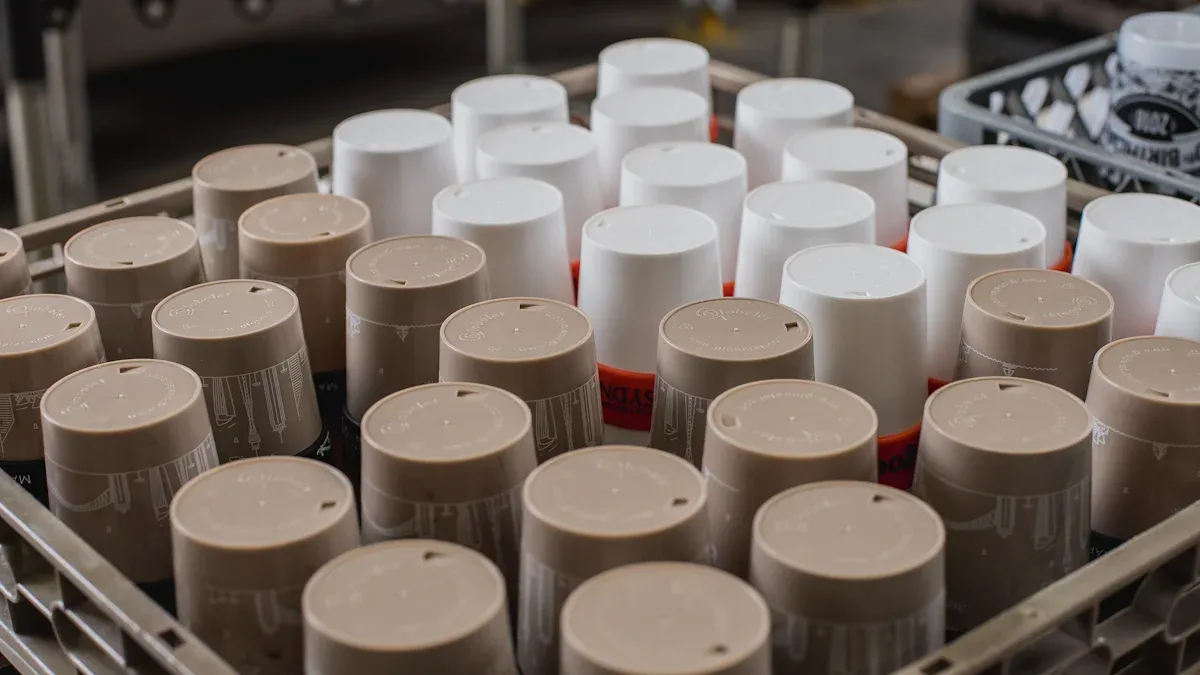
Image Source: unsplash
Thermoforming machines are manual, semi-automatic, or fully automatic. Each type works differently and makes cups at different speeds. Manual machines need workers for almost every step. They make fewer cups each hour. Semi-automatic machines use some automation but still need people to load and unload. Fully automatic machines use advanced technology to do most steps.
Manual machines usually make about 1,000 cups in one day. Semi-automatic machines can make between 1,200 and 10,000 cups every hour. Fully automatic machines can make 10,000 to 50,000 cups each hour. The output depends on how much the machine uses workers.
Automatic machines need only 2.1 labor hours for a shift.
Semi-automatic machines need about 8.7 labor hours for the same job.
Semi-automatic machines often stop for 1.32 hours each day because of people.
Automatic machines lower labor needs and keep mistakes low.
Semi-automatic machines can have changes in output and more errors.
Automatic machines help factories keep cup quality high. They make more cups with less work. This makes factories run better and costs go down.
Hengfeng makes many thermoforming machines for plastic cups. Their machines include semi-automatic and fully automatic types. Hengfeng’s fully automatic machines can make up to 50,000 cups every hour. This helps companies fill big orders fast.
The table below shows Hengfeng’s machine output ranges:
Machine Type | Output Range (cups/hour) |
|---|---|
Semi-Automatic | 1,200 – 10,000 |
Fully Automatic | 10,000 – 50,000 |
Hengfeng’s machines use smart controls and strong automation. These features help the machines run smoothly and make work easier. Hengfeng’s technology also lowers mistakes and stops. Many top brands use Hengfeng’s machines to make cups for food and drinks. Hengfeng’s focus on efficiency and quality makes their machines popular in factories worldwide.
Note: Picking the right thermoforming machine can help a company make more cups and spend less money on workers.
Keeping a thermoforming machine in good shape is important. Technicians check parts and fix things to stop breakdowns. Operators look at logs to find problems early. Companies make schedules for daily, weekly, monthly, and yearly tasks. Staff learn how to use and take care of the machines. Using good spare parts helps machines last longer. Teams watch how machines work by checking data and looking for patterns. Predictive maintenance, like checking for vibrations, finds issues before they cause stops. Keeping the work area clean helps machines run well.
Upgrades help machines make more cups. Hengfeng’s HFSJ series extrusion machines can reach 800 kg/h. This is 20% higher than most other machines. The screw design mixes plastic better and melts it faster. This means machines work better and make more cups.
Changing how things are done can help make more cups. Companies buy better machines and set up strong quality checks. Workers learn to use automation and follow good steps. These actions help use materials well and waste less. Using earth-friendly ways also helps output. When workers know the machine and process, they can fix problems fast and keep making cups.
Picking the best Hengfeng machine depends on many things. The table below shows what matters:
Criteria | Details |
|---|---|
Production Volume | Pick manual for small jobs, automatic for medium, fully automatic for big jobs. |
Material Compatibility | Make sure the machine works with plastics like PET, PP, PS, and earth-friendly types. |
Budget Considerations | Manual machines cost less, full systems cost more. |
After-Sales Support | Look for help with setup, repairs, and training to stop downtime. |
Stories show how picking the right machine helps. PackPro used real-time checks and made cycle times 15% more steady. EcoPack used better plastics and pre-treatment. They cut heating and cooling times by 20%. This made cycle times 15% shorter.
Tip: Doing regular maintenance, smart upgrades, and training helps companies get the most from their thermoforming machines.
Knowing about output capacity helps companies make more cups. It also helps them save money. Making machines work better gives better results. It also means less waste. Hengfeng is a top company for high-output, automated thermoforming. Companies can use these ideas to make more cups. They should think about Hengfeng when buying new machines.
Planning well helps companies earn more money.
Smart machines help workers do their jobs.
Good support keeps the machines running well.
To learn more, go to Hengfeng’s website or talk to their team.
Output capacity tells how many cups a machine makes in a certain time. Factories use this number to plan how many cups to make. It helps them meet what customers want.
A company can make more cups by keeping machines in good shape. Upgrading to automated systems also helps. Training workers is important too. Hengfeng’s machines use smart controls to boost output.
Hengfeng machines work with many plastics. PP, PET, and PS are common choices. These materials make strong cups for food and drinks.
Fully automatic machines use advanced technology. They need fewer workers. They run faster and make more cups each hour. Fewer mistakes happen with these machines.
Hengfeng gives support all over the world. Their team helps with setup, training, and fixing machines. Companies can call or email Hengfeng for quick help.