
English
Views: 0 Author: Site Editor Publish Time: 2026-01-09 Origin: Site

1 cup equals 8 fluid ounces. But not all ounces mean the same thing. In cooking, you might see fluid ounces for liquids and weight ounces for solids. Take a look at the types of ounces:
| Type of Ounce | Definition |
|---|---|
| Avoirdupois Ounce | The common type used for everyday items like food and other goods. |
| Troy Ounce | Primarily used for precious metals, such as gold and silver; equals about 31.1 grams. |
Getting the ounce to cup conversion right keeps your cups of flour or milk perfect for any recipe. Hengfeng always focuses on quality and precision so every cup you use brings great results.
1 cup is the same as 8 fluid ounces in the U.S. Always look to see if your recipe uses fluid ounces or weight ounces. This helps you measure things the right way.
Use a kitchen scale for dry ingredients. This makes sure you measure exactly. Weight measurements are better than volume for baking.
Keep a conversion chart close in your kitchen. It helps you change ounces to cups fast. This makes your recipes turn out the same every time.
Image Source: pexels
Let’s start with the question everyone asks: how many ounces in a cup? In the United States, 1 cup equals 8 fluid ounces. This is the standard used in most American kitchens. If you’re following a recipe, you’ll often see measurements like “1 cup of milk” or “2 cups of water.” When you see these, you can remember that each cup holds 8 fluid ounces.
But did you know that the size of a cup isn’t the same everywhere? In Japan, a cup is 200 milliliters. In Russia, there were two types: the charka (123 ml) and the stakan (246 ml). The U.S. cup is 240 ml, while Australia uses 250 ml. These differences can make international recipes a bit tricky!
Here’s a quick look at how cup sizes compare around the world:
| Country | Cup Size (ml) | Fluid Ounces |
|---|---|---|
| United States | 240 | 8 |
| Australia | 250 | 8.45 |
| United Kingdom | 225 | 7.6 |
| Japan | 200 | 6.8 |
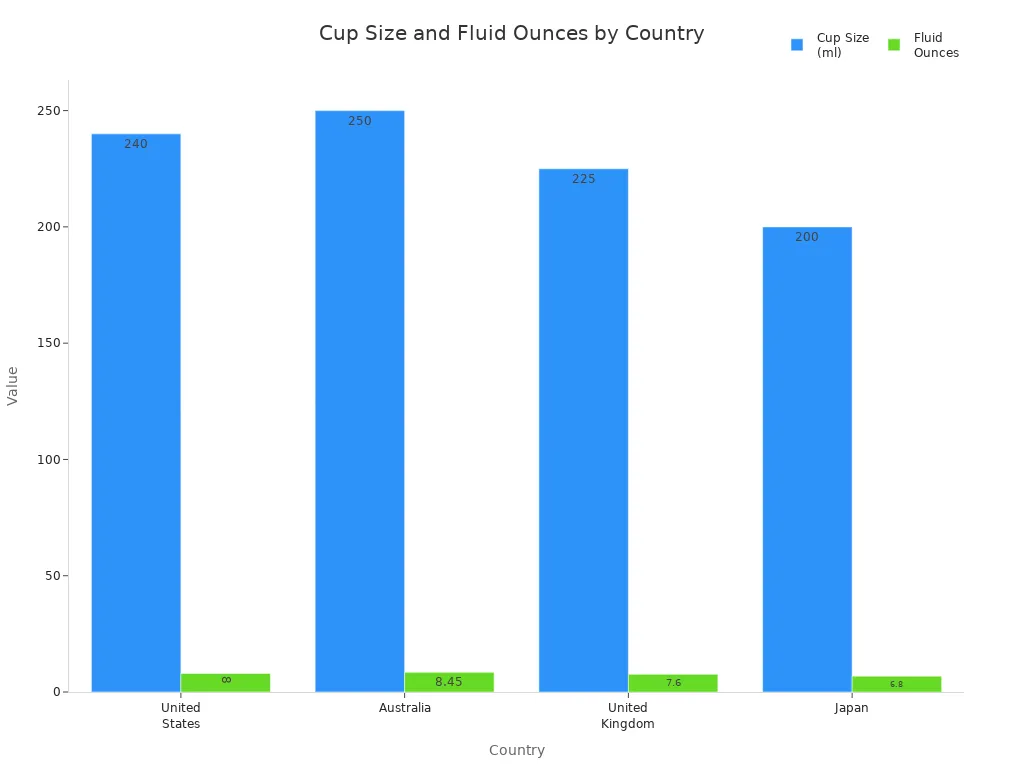
So, always check which country’s cup your recipe uses. This helps you get the right results every time.
Now, let’s talk about the difference between fluid ounces and weight ounces. This is where many people get confused with ounce to cup conversion. Fluid ounces measure volume. Weight ounces measure weight. For example, 8 fluid ounces of water fills 1 cup. But 8 ounces of flour by weight won’t fill a cup the same way. That’s because flour is lighter and less dense than water.
Fluid ounces measure volume.
Weight ounces measure weight.
1 avoirdupois ounce is about 28.35 grams.
1 fluid ounce is about 29.57 milliliters.
The word “ounce” comes from ancient Rome. It comes from the Latin word “uncia,” which meant one-twelfth of a pound. Over time, this idea became part of English trade and led to the fluid ounce we use today.
Here’s a table to help you see the difference:
| Measurement Type | Description | Conversion Example |
|---|---|---|
| Fluid Ounces (fl oz) | Measures Volume (e.g., water, coffee, soda) | 8 fl oz = 1 cup |
| Dry Ounces (oz) | Measures Weight (e.g., flour, sugar, dry pasta) | Depends on density |
When you’re using measuring cups, always check if your recipe calls for fluid ounces or weight ounces. This small step can make a big difference in your cooking and baking conversions.
If you want to convert ounces to cups, there’s a simple formula you can use:
Formula: Ounces divided by 8 equals cups.
Here’s how it works:
| Step | Description |
|---|---|
| 1 | Recognize that 1 cup equals 8 fluid ounces. |
| 2 | Given O ounces, determine how many cups C correspond to those O ounces. |
| 3 | Establish the proportion: 1/8 = C/O |
| 4 | Solve for C to get the formula: C = O/8 |
Let’s make it even easier with a handy oz to cups chart:
| Ounces (oz) | Cups |
|---|---|
| 1 | 0.125 |
| 2 | 0.25 |
| 4 | 0.5 |
| 6 | 0.75 |
| 8 | 1 |
| 12 | 1.5 |
| 16 | 2 |
| 24 | 3 |
| 32 | 4 |
Professional chefs use these steps to get accurate oz to cups conversions in busy kitchens:
Understand the conversion factor.
Identify the units in the recipe.
Decide which units you want to convert to.
Use a reliable oz to cups conversion chart.
Apply the conversion by dividing ounces by 8.
Adjust other ingredients if needed.
Check the consistency of your dish.
Round off measurements as needed.
If you want to be extra precise, you can use an ingredient conversion calculator. These calculators let you pick the ingredient, enter the amount, and get instant oz to cups results. They even adjust for density, so your measurements are spot on.
Hengfeng knows how important accuracy is in the food industry. That’s why Hengfeng produces high-quality measuring cups and packaging solutions. With the right tools, you can trust every oz to cups conversion and make every recipe a success.
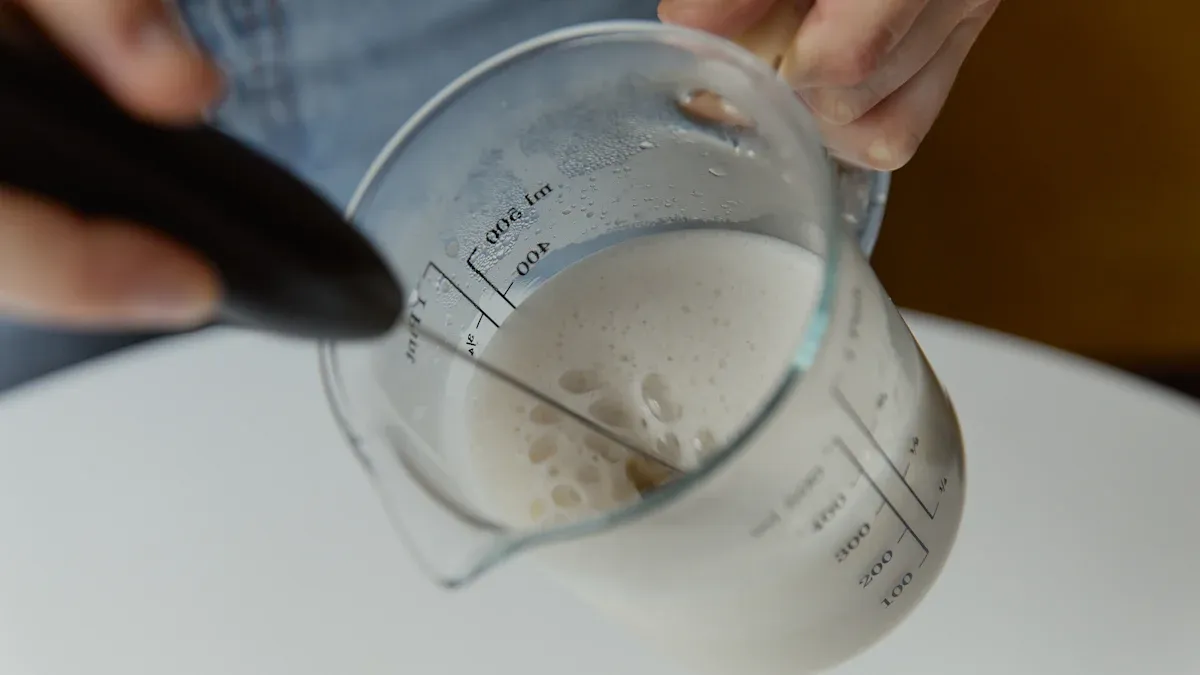
Image Source: pexels
Let’s start with liquids. If you want to convert ounces to cups for water, milk, or juice, you need to know the basics. In the United States, 1 cup equals 8 fluid ounces. This is the standard for most recipes. When you see oz to cups in a recipe, you can use this simple guide:
1 cup = 8 fluid ounces
¾ cup = 6 fluid ounces
½ cup = 4 fluid ounces
¼ cup = 2 fluid ounces
1/8 cup = 1 fluid ounce
To measure liquids, follow these steps:
Place your measuring cups on a flat surface.
Bend down so your eyes are level with the markings.
Pour the liquid in until it reaches the line for the amount you need.
This method helps you get the most accurate oz to cups measurement. Even a small mistake can change the taste or texture of your dish. Hengfeng supports food and beverage companies by providing precise measuring cups and packaging solutions. These tools help you get the right amount every time, whether you’re making a single cup of coffee or filling hundreds of cups in a factory.
Solids are a little different. You might see flour, sugar, or rice measured in ounces. Here, you need to know if the recipe means ounces by weight or by volume. Most home cooks use cups for dry ingredients, but professional bakers often use weight for better accuracy.
Here’s a table to help you see the difference between measuring by volume and by weight:
| Measurement Type | Description | Key Points |
|---|---|---|
| Volume | Used for liquids and some dry ingredients. | Easier for liquids; good for quick measuring. |
| Weight | Most accurate for all ingredients. | Best for baking; considers density and moisture. |
If you want to convert ounces to cups for solids, check if your recipe lists ounces by weight. For example, 8 ounces of flour by weight does not fill 1 cup. Flour is lighter than water, so 1 cup of flour weighs about 4.25 ounces. Always use a kitchen scale for the best results. Hengfeng’s advanced packaging machinery helps companies measure and fill cups with the right amount of solids, making sure every cup is just right.
Getting oz to cups right can make or break your recipe. Here are some tips to help you avoid mistakes:
Use a kitchen scale for dry ingredients. Weight is more accurate than volume.
Remember that cup sizes can change in different countries. Always check if your recipe uses US, UK, or Australian cups.
Know your ingredient. Some ingredients are heavier or lighter than others. For example, 1 cup of sugar weighs more than 1 cup of flour.
Make sure you know if the recipe means fluid ounces or ounces by weight. This can change your oz to cups conversion.
Tip: Keep a printed oz to cups chart in your kitchen. It saves time and helps you get the right amount every time.
Hengfeng’s high-quality measuring cups and automated cup making machines help both home cooks and professionals get consistent results. Whether you’re baking at home or packaging food in a factory, accurate oz to cups measurements matter. With the right tools and a little practice, you can master every recipe and fill every cup with confidence.
Getting oz to cups right depends on your tools. Measuring cups are important in every kitchen. But not all measuring cups are the same. If you use the wrong cup, you can have problems. Baking needs exact amounts. If you add too much butter, cookies will spread out. Not enough flour can change the texture. Too much baking powder makes cakes rise and then fall. To get oz to cups correct, you need the best equipment.
Here are some helpful tools for oz to cups:
Digital scales measure dry ingredients very well.
Clear measuring cups are best for liquids. Put them on a flat surface and look at eye level.
Dry measuring cups are good for flour or sugar. Level them off for the right amount.
Professional kitchens use these tools for oz to cups conversions. Measuring cups that follow industry rules help you get the same results each time. Good quality cups hold the exact amount. This is important for food and even medicine.
Being consistent gives you great results. Measuring is one of the most important steps in recipes. Accurate oz to cups conversions help your cakes and drinks taste the same every time. Using a scale for oz to cups gives you steady results, especially when baking. Sometimes measuring cups are not exact, so a scale is a smart tool.
Hengfeng’s cup making machines make oz to cups conversions even better. Here is how these machines help:
| Feature | Description |
|---|---|
| Precision | Gives the right amount for all products. |
| Hygiene | Keeps everything clean and safe. |
| Operational Efficiency | Works fast and changes quickly for different cups. |
| Reliability | Fills and seals every cup the same way. |
| Accuracy | Servo-driven technology fills cups with the right amount. |
| User-Friendly | Touch screens make it easy to change settings. |
Automated machines are faster and more accurate than doing it by hand. Manual oz to cups conversions can be slow and have mistakes. Automated systems measure super fast, so every cup is filled just right.
Tip: Keep an oz to cups chart in your kitchen. It saves time and helps you get perfect results every time.
With Hengfeng’s solutions, you can trust your oz to cups conversions. This works for baking at home or filling many cups in a factory.
Let’s wrap up! Here’s what matters most about cups.
Fluid ounces measure volume, weight ounces measure weight.
Cups make recipes easy, but only if you use the right kind.
Accurate cups conversions help your cakes and cookies turn out perfect.
Hengfeng’s packaging keeps cups consistent every time.
Keep a cups conversion chart handy for quick checks.
| Measurement Type | Conversion |
|---|---|
| 1 cup | 8 fluid ounces |
| 2 cups | 16 fluid ounces |
| 4 cups | 32 fluid ounces |
Tip: Use cups for every recipe and you’ll get great results!
Check the ingredient. Liquids use fluid ounces. Dry items like flour or sugar often use weight ounces. Always look for clues in the recipe.
You can, but it’s better to use clear cups for liquids and dry cups for solids. This helps you get the right amount every time.
Metric cups are a bit different. One metric cup equals 250 milliliters. Use a conversion chart to match metric cups with US cups for best results.


