
English
Views: 0 Author: Site Editor Publish Time: 2025-12-26 Origin: Site

Thermoforming machines are very important in making beverage cups. These machines turn plastic sheets into cups with careful control. Engineers make each beverage cup machine to work faster and help with automation. They also make sure the cups are good quality. Reports show that new thermoforming technology makes less waste and uses less energy. Automation helps stop mistakes and makes work go faster. The table below shows these benefits:
| Aspect | Impact |
|---|---|
| Efficiency | Technology makes less waste and uses less energy. It helps production go smoother. |
| Automation | Automated parts lower mistakes and help products come out faster. |
| Quality | Machines make sure cups are always the same and high quality. |
These features make beverage cup machines great for making many cups that are all the same.
Thermoforming machines help save energy and cut down waste. This makes the production process smoother and faster.
Automation in beverage cup machines lowers mistakes made by people. Workers can then spend more time on quality and helping customers.
These machines use many kinds of plastics. Factories can make different cups to meet what people want.
It is important to check and fix machines often. This keeps them working well and keeps workers safe.
Picking the best machine means thinking about what you need to make. You should also look at how much is automated and if the supplier will help you later.
Image Source: unsplash
A beverage cup machine uses special methods to shape plastic sheets. It makes cups with very good accuracy. The machine uses pressure, vacuum, and mechanical forming. These help make clean cuts and line up the cups just right. This way, every cup is the right size and shape. The machine has smart control systems like PLC and HMI. These let workers set exact rules for each batch. Custom molds let factories make many cup sizes and styles. The quality stays high.
Note: Precision forming helps make less waste. It also keeps the work fast and smooth. High uptime means the machine works longer without stopping. This helps all the cups stay the same.
The table below shows how new beverage cup machines are both precise and reliable:
| Feature | Description |
|---|---|
| Efficient production | Uses new technology for quick forming, high output, and low energy use. |
| Intelligent control | PLC and HMI systems keep the machine steady and exact. |
| Precision mold design | Custom molds make different cup types and keep quality high. |
| Environmental protection | Better heating systems use less energy and can fit in many layouts. |
| Safety protection system | Emergency stops and overload protection keep workers safe. |
It is important for cups to be the right size and shape. Clean cuts and good alignment help every cup meet the rules. Custom cutting layouts let factories make different designs. Less waste and high uptime keep the work steady.
Automation is a big part of every beverage cup machine. Automated systems do jobs like feeding plastic sheets, forming, cutting, and stacking cups. This means workers do not have to do these jobs by hand. There are fewer mistakes. Workers can do other things, like checking quality or helping customers.
Automation helps factories make more cups in less time.
Machines do the heavy lifting, so workers stay safe.
Factories spend less money because they need fewer workers for simple jobs.
How fast the machine works depends on the cup size. The table below shows how many cups a machine can make in one hour:
| Cup Size | Production Speed (cups per hour) |
|---|---|
| Small (50 - 100 ml) | 3,000 - 6,000 |
| Medium (200 - 300 ml) | 2,000 - 4,000 |
| Large (500 - 1000 ml) | 1,000 - 2,500 |
Fast and automatic machines help factories fill big orders. They also help factories keep up with what people want.
A beverage cup machine can use many kinds of plastic. The most common ones are polypropylene (PP), polystyrene (PS), polyethylene terephthalate (PET), and polylactic acid (PLA). Each plastic has its own good points:
Polypropylene (PP): It bends and handles heat, so it is good for hot drinks.
Polyethylene Terephthalate (PET): It is best for cold drinks but needs special care for heat.
Polystyrene (PS): It costs less but breaks easily, so it is not for hot drinks.
Polylactic Acid (PLA): It breaks down in nature and is good for cold drinks.
The table below shows how much these plastics are used:
| Plastic Material | Market Share Description |
|---|---|
| Polypropylene (PP) | Was used the most in 2021 and is common in packaging |
| Polystyrene (PS) | Used a lot |
| Polyethylene Terephthalate (PET) | Used a lot |
| Polyethylene (PE) | Used a lot |
| Polyvinyl Chloride (PVC) | Used a lot |
| Acrylonitrile Butadiene Styrene (ABS) | Used a lot |
| High Impact Polystyrene (HIPS) | Used a lot |
A beverage cup machine uses a microcomputer to change the process for each plastic. It can form and cut in one place, which saves time and energy. Some machines, like the TZ-750B, can use many types of plastic sheets. They can also make different cup shapes with full automation.
Tip: Thermoforming machines use aluminum molds. These heat up and cool down fast. This saves energy and makes less waste than other ways.
A beverage cup machine lets factories make many kinds of cups. This helps them meet what customers want and follow new trends.
Factories want every cup to look and feel the same. Thermoforming machines help them do this. Automated systems make fewer mistakes than people. The error rate drops from about 4.2% with people to only 0.8% with machines. This means cups are more reliable. Workers know each cup is safe and meets quality rules. Automation keeps the process steady. Cups stay the same from batch to batch.
Automated systems make fewer mistakes.
Steady machines help check quality.
Making more cups does not lower quality.
Note: When cups are always good, customers trust the factory. Factories can also meet tough industry rules.
A beverage cup machine helps factories save money in many ways. These machines work fast and can make lots of cups at once. The molds cost less because they use aluminum instead of steel. The machine can heat, form, cut, and stack cups with little help from workers. This saves money on workers and makes each batch faster. The heating system uses electric or hot air. It heats plastic quickly and evenly. This lowers energy bills and keeps things running smoothly.
Fast cycles make more cups.
Cheaper molds help start new jobs.
Automatic steps mean fewer workers are needed.
Good heating saves energy.
Many companies get their money back in 12 to 18 months. This quick payback helps factories grow and get better faster.
Factories sometimes need to make more cups when people want more. Thermoforming machines can make more cups easily. Some models, like the TZ-6245 and TZ-7565, can make up to or over 1,000,000 lids each day. The table below shows how much these machines can do:
| Machine Model | Production Capacity (lids per day) |
|---|---|
| TZ-6245 | Up to 1,000,000 |
| TZ-7565 | Exceeds 1,000,000 |
Other things help with making more cups too:
High-speed filling makes production faster.
Machines can make many cup sizes and shapes.
Automation keeps the line working with little stopping.
Machines can work together to stop slowdowns.
A beverage cup machine helps factories meet market needs fast. They can make more cups or change styles without buying new machines.
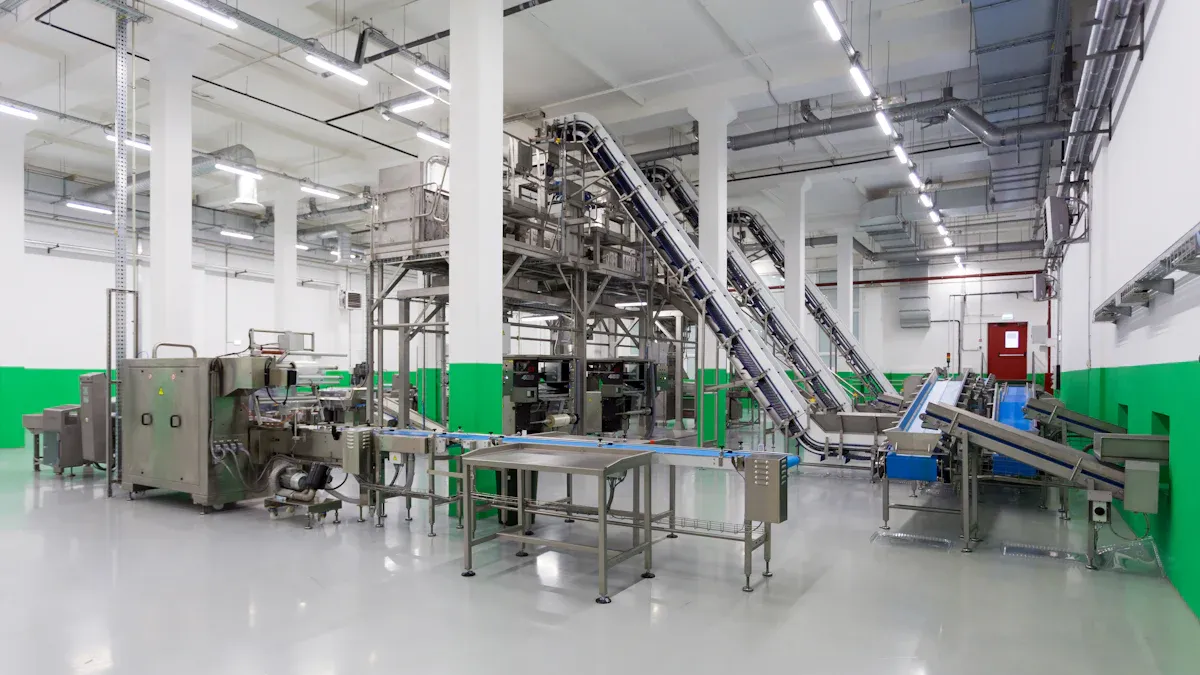
Image Source: unsplash
Factories use smart machines to connect each step. A beverage cup machine fits into lines that form, cut, and stack cups. These machines also work with cup lid machines. They can change molds fast for different cup sizes. This setup helps factories avoid slowdowns. Everything keeps moving without stopping. Operators just watch the system and check for problems. Most lines only need one or two people to run.
Tip: Integrated lines help factories save money and energy. They also make sure every cup is the same weight and thickness.
Here is how these machines help production:
| Feature | Description |
|---|---|
| Efficiency | Integrated lines stop delays and bottlenecks. They lower labor costs and save energy. |
| Product Consistency | The whole line makes sure cups have the same weight and thickness. |
| Automation | The system is fully automatic. Only one or two people are needed. |
| High-Speed Production | These machines can make up to 150 cups each minute. This helps big drink companies make more cups. |
Regular care keeps machines working well. Workers check heaters, vacuum parts, and clamps every day. They clean off dust and dirt. They add oil to moving parts. They look for anything strange. Each week, they test sensors and check for cracks in molds. They also test emergency stops. Every month, they check wires and cooling systems. They change old filters or seals.
Daily tasks:
Check important parts.
Clean the machine.
Add oil where needed.
Watch how the machine works.
Weekly routines:
Test sensors.
Look at molds.
Try out safety features.
Monthly routines:
Check wires.
Look at cooling parts.
Change old parts.
Safety is very important in every factory. Workers wear safety shoes, glasses, and gloves. Sometimes they wear hard hats too. The right clothes help stop accidents. Machines must be set up the right way to avoid problems. The NSF/ANSI 25-2023 rule says machines must not break easily. They must keep out bugs and dirt. This keeps workers and cup users safe.
| Safety Feature | Description |
|---|---|
| Safety Shoes | Workers must wear these to protect their feet. |
| Safety Glasses | These protect eyes from danger. |
| Gloves | These keep hands safe when using machines. |
| Hard Hats | Sometimes needed to protect heads from getting hurt. |
| Proper Uniforms | Safe clothes stop accidents and keep workers safe. |
A beverage cup machine with good care and safety helps factories work better. It also keeps everyone safe.
Factories need to pick machines that fit their goals. When choosing a beverage cup machine, they should follow some easy steps:
Figure out how many cups they need each month and what sizes to make.
Pick how much automation they want based on workers and money.
Make sure the machine works with the right materials, like PS, PP, or PET, for hot or cold drinks.
Ask suppliers about mold choices, like cup size, depth, and how fast molds can be changed.
Look at how much energy the machine uses by checking kW/h. Lower numbers mean lower bills.
Check if the frame is strong. Stainless steel lasts longer and does not rust.
Watch a live demo to see how the machine works.
Ask about after-sales help, like spare parts, training, and how long the warranty lasts.
Stay away from machines without clear certifications or missing details.
Tip: Factories should always ask for customer reviews and check certifications before buying.
Factories sometimes need machines that can change for different products. Custom features help them meet special needs. The table below shows some common choices:
| Customization Feature | Description |
|---|---|
| Personalized customization | Lets factories use custom molds for special brands or functions. |
| Mold flexibility | Makes it easy to switch molds and use different cup shapes and sizes, like round or oval. |
| Widely applicable materials | Works with many types of plastic sheets, like PET, PP, PS, and PLA. |
These features help factories change fast when the market or customers want something new.
Good supplier support helps factories keep working without problems. Top suppliers give many helpful services:
| Feature | Description |
|---|---|
| 24/7 technical support | Help is always ready, day or night, anywhere. |
| Unlimited callouts | Teams answer problems quickly. |
| Preventative maintenance | Regular checks help machines work longer and break less. |
| Installation guidance | Suppliers help set up machines and train workers. |
| Spare parts inventory | Replacement parts are easy to get fast. |
| Emergency support | Help is there after hours for big problems. |
| Training and troubleshooting | Suppliers teach workers and fix problems in person or online. |
New features, like servo-driven systems and smart automation, make machines faster and more exact. Machines with digital controls and easy panels help workers watch the process and see alerts. Some machines use up to 13 servo motors. This keeps work steady and lowers repair costs.
Note: Factories should pick suppliers who answer fast and give full help for setup, training, and repairs.
Beverage cup thermoforming machines help factories in many ways. They cost less because the tools are cheaper and they work fast. These machines can use different plastics for many jobs. Factories can make cups in many shapes and styles. They also help the environment by using plastics that can be recycled.
Manufacturers need to think about some important things when picking a machine:
| Factor | Description |
|---|---|
| Production Capacity | How many cups the machine makes each hour. |
| Cup Sizes and Shapes | If the machine can change molds for new products. |
| Automation Level | If it can stack and pack cups by itself. |
| Energy Efficiency | Machines that use less energy help save money. |
| Maintenance & Support | Good help keeps the machine working well. |
A good beverage cup machine makes more cups faster. It also keeps the cups high quality. Companies that pick machines that fit their needs and buy from trusted brands get better results. They also have fewer problems.
Beverage cup machines can use many kinds of plastic. They make cups from polypropylene (PP), polystyrene (PS), polyethylene terephthalate (PET), and polylactic acid (PLA). Each plastic works best for different drinks and helps the environment in its own way.
How fast a machine makes cups depends on the cup size and the machine type. Some machines can make up to 6,000 small cups every hour. Fast machines help factories fill big orders quickly.
Operators need to learn how to use the controls and follow safety rules. Suppliers usually give training and easy-to-read manuals. Most workers learn how to use the machine in just a few days by practicing.
Factories can make different cup sizes by changing the molds. New machines let workers swap molds quickly. This helps factories keep up with what customers want.
Machines have emergency stop buttons, overload protection, and safety guards. Workers wear safety shoes, gloves, and glasses. Regular checks help keep everyone safe while using the machines.


