
English
Views: 0 Author: Site Editor Publish Time: 2025-10-30 Origin: Site

Thermoforming vs. Vacuum Forming can be confusing for many people. Thermoforming uses heat and pressure to shape plastic sheets, while vacuum forming employs a vacuum to pull plastic over a mold. It’s important to note that vacuum forming is a type of thermoforming, and it works best for shallow molds and detailed surfaces. Manufacturers must understand the differences between these methods, as each is suitable for different products. Recent data indicates that the vacuum thermoforming machines market was valued at $3.45 billion in 2022, with strong growth observed in the pharmaceutical and food industries. More companies are now utilizing both thermoforming and vacuum forming technologies to enhance their efficiency and sustainability.
Thermoforming uses heat and pressure to shape plastic sheets. Vacuum forming uses a vacuum to pull plastic over a mold. Knowing these differences helps manufacturers pick the best method for their products.
Vacuum forming works well for simple shapes and fast production. It saves money for small or medium batches. This makes it a good choice for packaging and basic items.
Thermoforming is flexible and uses different techniques. It can make more complex shapes and detailed designs. It works for car parts, medical devices, and consumer products.
Picking the right material is very important. Not all plastics work with both methods. Companies should use materials that heat and cool well to keep product quality high.
Think about how many products you need and the cost. Vacuum forming costs less for small batches. Thermoforming is better for bigger amounts and more detailed designs.
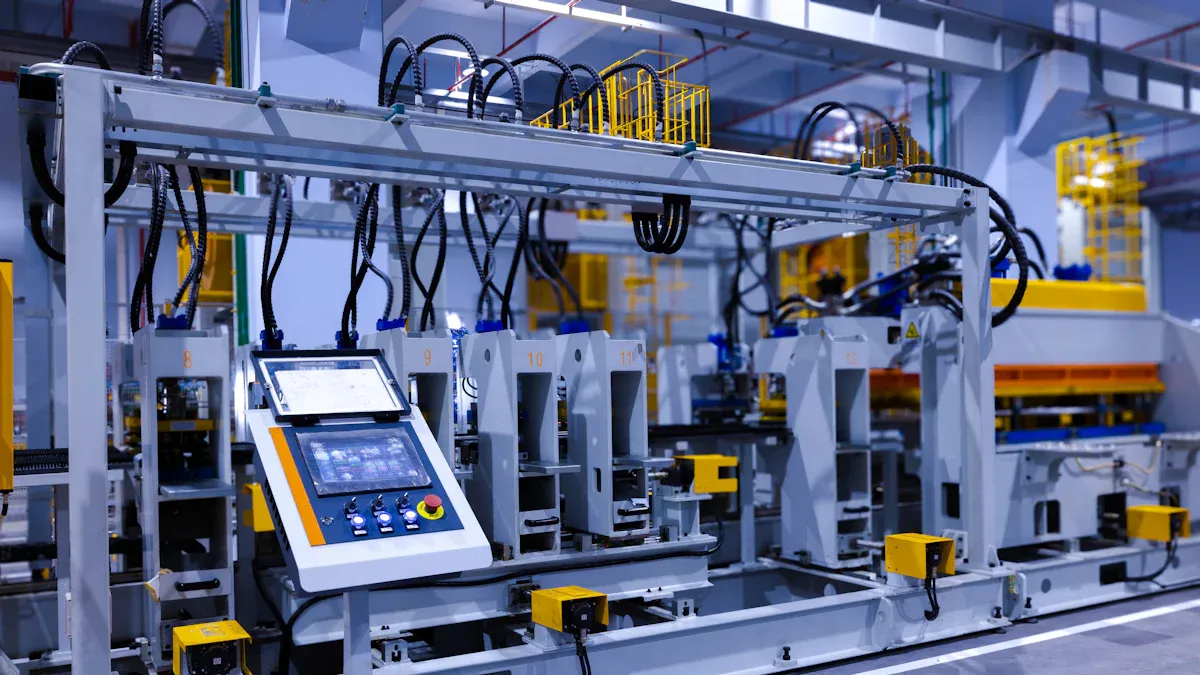
Image Source: unsplash
Thermoforming is a way to make things from plastic sheets.
First, the plastic sheet is heated until it gets soft.
Next, the soft sheet is put over a mold to get its shape.
When the plastic cools down, it keeps the mold’s shape.
Workers cut off extra plastic so the item is ready.
Thermoforming helps companies make many things, like packages and car parts, using different thermoforming materials.
Thermoforming has a few main steps that change how good the product is:
Material Selection: Picking the right thermoforming materials, like how thick or bendy they are, changes how the plastic acts.
Heating the Plastic Sheet: The plastic sheet is heated so it gets soft. If the heat is not even, the plastic can get weak or thick in spots.
Forming the Plastic Sheet: The soft plastic is shaped over a mold with vacuum, pressure, or force.
Trimming and Finishing: Extra plastic is cut off, and the item is finished by smoothing or adding details.
Note: Heating is the most important step. If the plastic is not heated right, the item can be weak or have uneven sides.
There are different types of thermoforming, and each one is used for special jobs. The table below lists the main types and what they are used for:
| Thermoforming Type | Process Description | Applications |
|---|---|---|
| Blow Molding | Uses a vacuum to pull soft plastic against a mold. | Fast and cheap for simple shapes. |
| Pressure Forming | Uses more pressure for sharp details. Pressure forming makes crisp shapes. | Good for parts that need to keep their shape. |
| Mechanical Forming | Uses force to push plastic into shape. | Used for parts that need lots of detail. |
| Drape Forming | Presses plastic onto a rod to keep it even. | Good for simple shapes that need even thickness. |
| Matched-die Thermoforming | Uses two molds to make walls even. | Used for jobs that need high accuracy. |
| Billow Forming | Uses air to make free shapes. | Makes custom shapes without a mold. |
| Twin Sheet Forming | Joins two sheets to make hollow parts. | Used for hollow items with two sides. |
Thermoforming lets companies pick the best way and thermoforming materials for what they want to make.
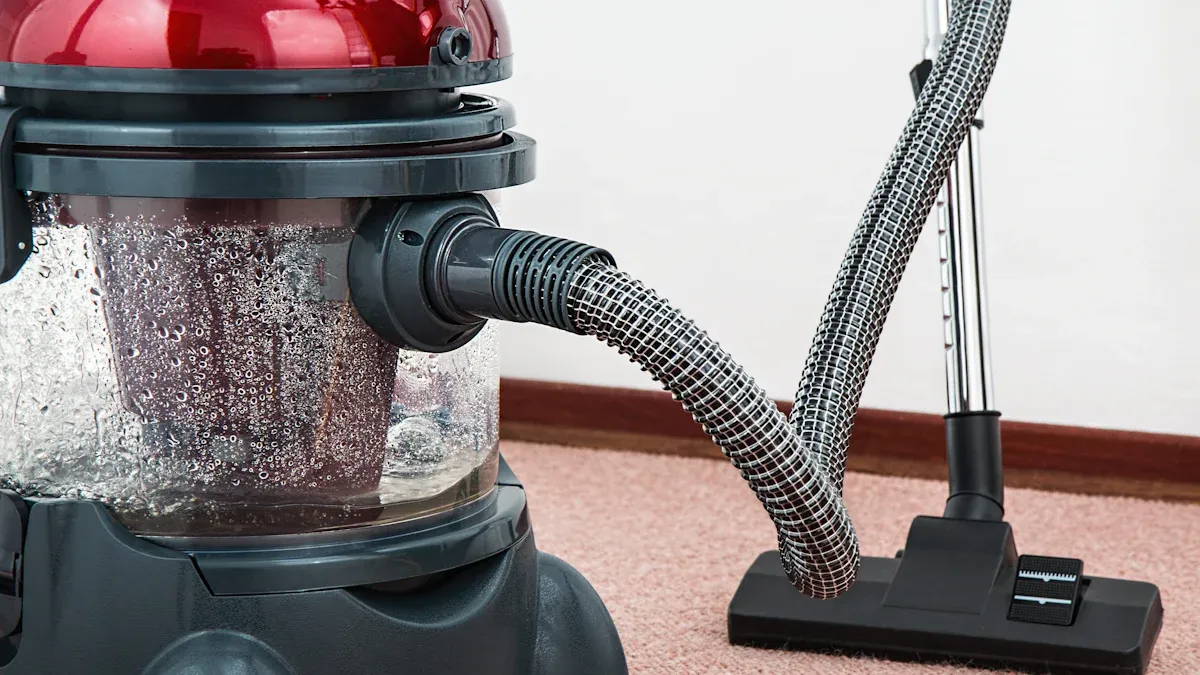
Image Source: pexels
Vacuum forming is a type of thermoforming. It uses heat and a vacuum to shape plastic. Many companies pick vacuum forming for simple shapes. It works best for shallow molds. The machines for vacuum forming are not very complicated. Companies use this process to make packaging and trays. It also makes many things used at home. Vacuum forming is fast and saves money.
Tip: Vacuum forming is great when you need things made quickly and do not need tiny details.
The table below shows how vacuum forming is different from other thermoforming methods:
| Feature | Vacuum Forming | Other Thermoforming Techniques |
|---|---|---|
| Process | Uses a vacuum to pull hot plastic over a mold | Can make more detailed shapes |
| Equipment Requirements | Easier, uses thinner plastic sheets | Needs bigger and stronger machines |
| Cost | Cheaper and faster for simple parts | Costs more because it is harder to do |
| Suitability | Best for packaging and easy shapes | Better for special and detailed items |
Vacuum forming has a few easy steps. First, the plastic sheet is heated until it is soft. Next, workers put the soft sheet on a mold. The machine makes a vacuum that pulls the plastic tight. Then, the plastic cools down and gets hard. Last, workers cut and finish the item.
Here is a simple list of the steps in vacuum forming:
Heat the thermoplastic sheet
Put the hot sheet on the mold
Make the vacuum
Cool and harden the plastic
Cut and finish the product
Vacuum forming is special because it needs less equipment and works faster than other ways.
Many kinds of plastic are used in vacuum forming. High impact polystyrene is used for packaging and home items. It is also used for parts in fridges. Acrylic is used in planes for windows and storage spaces. Vacuum forming also makes fridge trays, drawers, bathtubs, showers, and cooking tools.
The table below shows some materials and what they are used for:
| Material Type | Applications |
|---|---|
| High Impact Polystyrene | Packaging for food, home items, and fridge parts |
| Acrylic | Used in planes for windows and storage areas |
Vacuum forming is also used for car lights, inside car parts, and bumpers. Electronics companies use it for remote controls and TV cases. Many home items like fridge parts, cooking tools, and Tupperware are made this way.
Note: Vacuum forming works best with plastics that heat and cool fast. This helps the process stay quick and dependable.
Thermoforming and vacuum forming shape plastic in different ways. Thermoforming uses heat and pressure to shape plastic sheets. Vacuum forming uses a vacuum to pull hot plastic over a mold. Pressure forming and twin-sheet forming use more force or two molds for harder shapes. The table below shows how each process is different:
| Feature | Vacuum Forming | Pressure Forming | Twin-Sheet Forming |
|---|---|---|---|
| Mold Type | Single mold | Single mold (pressure chamber) | Two molds (top & bottom) |
| Forming Force | Vacuum only | Vacuum + 100 psi pressure | Dual vacuum + pressure |
| Part Detail | Basic | High precision | Complex, hollow |
| Cycle Time | Fast | Moderate | Longer |
| Tooling Cost | Low | Medium | High |
| Material Thickness | 0.25–6 mm | 0.5–8 mm | 2–10 mm |
| Applications | Trays, enclosures | Panels, housings | Tanks, pallets |
| Machine Complexity | Simple | Advanced | Most complex |
Tip: Vacuum forming is best for easy shapes and quick jobs. Pressure forming and twin-sheet forming are better for tough shapes.
Thermoforming and vacuum forming also give different results for detail. Vacuum forming makes simple shapes and does not show small details well. Pressure forming is good for sharp edges and fine details. The table below compares them:
| Process | Achievable Detail and Precision |
|---|---|
| Vacuum Forming | Not great for small details |
| Pressure Forming | Makes parts with sharp and clear details |
Manufacturers use pressure forming when they need crisp lines and sharp corners. Vacuum forming is used when details are not as important.
Cost and machines are important when picking a process. Vacuum forming uses simple machines and costs less to start. Thermoforming, like pressure and twin-sheet forming, needs more advanced machines and costs more. The table below shows the main cost differences:
| Process | Advantages | Disadvantages |
|---|---|---|
| Thermoforming | Fast production, low tool cost, easy prototypes | Uneven stretching, higher part cost, undercuts |
| Vacuum Forming | Cheap to make, molds can change sizes | Thick plastic can wrap, only one setup at once |
Thermoforming machines can make a lot of items, like cups and containers, very fast. Vacuum forming cannot make as many items at once, so it costs less but makes fewer things.
Speed and how well the process works are important. Vacuum forming is fast and works well for simple parts. Pressure forming is faster and better for detailed parts, but costs more to start. The table below compares them:
| Method | Speed | Efficiency | Cost | Detail Level |
|---|---|---|---|---|
| Vacuum Forming | Moderate | High | Low start-up cost | Moderate |
| Pressure Forming | High | Very High | Higher start-up cost | High |
Quick to set up
Low cost to begin
Good for small orders
Works well for big parts
Companies use vacuum forming for fast jobs. They use pressure forming for lots of detailed parts.
Thermoforming and vacuum forming use different plastic sheets. Vacuum forming works best with thin sheets that heat and cool quickly. Thermoforming, like pressure and twin-sheet forming, can use thicker sheets and more types of plastic. This helps companies pick the right process for their needs.
Note: The plastic you pick changes how strong, nice, and costly the product is.
Thermoforming and vacuum forming are used for different things. Vacuum forming makes trays, covers, and simple packages. Thermoforming, like pressure and twin-sheet forming, makes panels, cases, tanks, and pallets. The table below shows where each process is best:
| Application | Industry | Reason for Preference |
|---|---|---|
| Food Packaging | Food Industry | Gives good design control and uses safe materials. |
| Medical Packaging | Medical Field | Makes strong, clean packages for medical items. |
| Consumer Electronics | Electronics Industry | Keeps products safe and fits them well in boxes. |
| Cosmetics Packaging | Cosmetics Industry | Makes pretty and useful packages that people like. |
Thermoforming and vacuum forming help companies pick the best way to make their products. Pressure forming is good for jobs that need sharp details. Vacuum forming is good for fast, cheap, and simple shapes. Companies look at what they need and pick the best process.
Thermoforming gives many good things to companies. It helps car makers and other industries. Here are some main benefits:
Tools for making parts are ready fast, in 2-3 weeks.
The process saves money, with tool costs much lower than injection molding.
Prototype tools use cheap molds, so testing new ideas is easy.
Changing tools and parts is quick and does not cost much.
Finished products look nice and work well.
Big parts keep their size right, even up to 6 feet by 10 feet.
Many types of engineered thermoplastics can be used.
Orders are flexible, and wait times are short.
Good for small and medium batches, from 50 to 5,000 pieces.
Shipping can be planned to keep less stock.
Paint and gel coats can be replaced.
Hard metal and fiberglass parts can be changed, saving money and weight.
Thermoforming is very helpful for making car parts, packages, and custom items.
Thermoforming has some problems too. The table below shows the most common ones:
| Disadvantage | Description |
|---|---|
| Material Limitations | Only works with thermoplastic materials. Thermosets and metals cannot be easily thermoformed. |
| High Tooling Costs | Initial tooling costs can be high, especially for complex or large molds. |
| Limited Design Capabilities | Hard to achieve undercuts or sharp corners, which limits design options. |
| Poor Surface Finish | Parts may have scratches or mold lines, which can affect how they look and work. |
| Limited Production Volume | Less cost-effective for very small runs because of tooling costs and slower cycle times. |
Vacuum forming has special benefits, especially for cars. Here are some key advantages:
Tooling costs are lower than other ways, so it is good for small and medium batches and testing.
Parts are made faster, so companies can react quickly.
Many thermoplastic materials can be used, making products better.
Great for big parts, so less assembly is needed and parts are stronger.
Molds can be changed easily, so custom designs do not cost much.
Parts are light but strong, which is good for cars and transport.
The surface finish is good, so less fixing is needed after.
Tooling is cheap, production is quick, materials are flexible, and designs are easy to change.
Vacuum forming is picked for car panels, trays, and other big items.
Vacuum forming has some issues too. The table below lists the main problems:
| Challenge | Description |
|---|---|
| Complex shapes | Difficult to form complex shapes with fine details or sharp corners. |
| Thickness variations | Not suitable for parts with big thickness changes, which can cause uneven walls. |
| Material limitations | Not all plastics work well; some may release harmful fumes when heated. |
| Tooling costs | Large or complex molds can still be expensive. |
| Surface finish | Surface may not be as smooth as parts made by other methods. |
| Limited production quantities | Not the best choice for high-volume runs; usually used for prototypes or low-volume jobs. |
Car companies use vacuum forming for big, simple shapes. They pick other ways for detailed or lots of parts.
Manufacturers need to think about many things before picking thermoforming or vacuum forming. Each thing can change how the product turns out and how much it costs.
Picking the right material is important. Not all plastics work with every process. Some plastics do not heat or cool well. This can make the product less good.
How many items you need matters a lot. Vacuum forming is best for small or medium amounts. Other ways work better for big batches.
The price of making molds can be very different. Vacuum forming usually uses cheaper molds. If you want fancy shapes, you might need expensive tools.
How fast you need the product is important. Short wait times help companies finish orders quickly.
What the project needs, like tiny details or special shapes, helps pick the right method.
Tip: Companies should choose the forming process that fits their project needs to get the best results.
Experts also look at these things:
Material strength and flexibility help decide what to use.
The shape and how hard it is to make matter. Simple shapes are good for vacuum forming. Hard shapes need other ways.
If you need parts to be very exact, you may need special forming methods.
Making lots of items can make expensive tools worth it.
What tools and machines you have can change your choices.
Worker skills and pay can change the total cost.
How the process affects the environment is now more important.
What the product will be used for helps pick the best way.
Some forming methods work better for certain jobs. The table below shows which method is good for each use:
| Forming Method | Applications |
|---|---|
| Vacuum Forming | Car parts, packaging, medical devices, toys |
| Twin-Sheet Forming | Automotive parts, industrial uses needing strength |
| General Plastic Forming | Containers, bottles, trays, dashes, trim, interiors, syringes, tubing, device cases, household appliances, electronics |
Manufacturers use vacuum forming for packaging, car parts, and medical tools. Twin-sheet forming is good for car parts that need to be strong. General plastic forming is used for many things like containers, bottles, trays, and electronics.
Packaging: Containers, bottles, trays
Automotive Parts: Dashes, trim, interiors
Medical Equipment: Syringes, tubing, device cases
Consumer Goods: Household appliances, electronics
Note: Companies should pick the forming method that matches what the product will be used for. This gives the best results and value.
How much money you save depends on part size, how many you need, and how detailed the part is. Thermoforming usually has cheaper mold costs than other ways. Molds for thermoforming can be made fast, sometimes in just days or weeks. This helps companies sell products sooner.
Thermoforming molds are easy to change. If a company wants a new design, they do not have to start over. Setting up thermoforming is simple and can be done again and again. This makes it good for small batches.
For big parts, thermoforming is often the cheapest way.
For small, detailed parts that are made a lot, other ways like injection molding may be better. These ways make less waste and work faster.
For small parts that are not made much, thermoforming is still cheap because it costs less to start and is easy to do.
Companies should always look at the total cost, including molds, materials, and worker pay, before picking a process.
The table below compares vacuum forming and injection molding for important things:
| Criteria | Vacuum Forming | Injection Molding |
|---|---|---|
| Production Volume | Low to medium (250–2,500/year) | High (thousands to millions) |
| Part Complexity | Simple shapes, no undercuts | Complex shapes, undercuts, threads |
| Material Needs | Thermoplastics only | Thermoplastics, thermosets, metals |
Vacuum forming is best for easy shapes and smaller amounts. Companies that need lots of parts or hard shapes may pick other ways.
Thermoforming and vacuum forming both use heat to shape plastic sheets. But they do not use the same steps or work for the same things. The table below shows how they are alike and different:
| Aspect | Thermoforming | Vacuum Forming |
|---|---|---|
| Definition | Shapes plastic sheets with heat | Uses vacuum to form plastic over a mold |
| Methodology | Many techniques, like pressure forming | Relies on vacuum process |
| Applications | Automotive, consumer products, medical devices | Packaging, food industry, exhibitions |
| Advantages | Versatile design, less material waste, durability | Lower costs, faster turnaround for short runs |
Companies should pick the right method for their job. Vacuum forming is good for packaging and fast jobs. Thermoforming is better for tough shapes and strong products. It is important to think about the plastic, mold, heat, and machine size.
Think about what your project needs before picking a machine.
Check the size, plastic type, and if the machine can work by itself.
You can learn more in these guides:
Thermoforming shapes plastic sheets with heat and pressure. Vacuum forming uses a vacuum to pull plastic over a mold. Vacuum forming is just one kind of thermoforming.
Pressure forming makes sharper details than vacuum forming. Vacuum forming is best for simple shapes without small details.
Both machines use many of the same thermoplastics. Some plastics work better with one method because of how thick they are or how they heat up.
Vacuum forming usually costs less for small batches and easy shapes. It uses cheaper molds and equipment.
Vacuum forming is used to make trays, packaging, car panels, and appliance parts. Companies pick it for fast jobs and simple designs.


